
The Benefits of Mugwort have led to its recognition as a powerful herb belonging to Artemisia vulgaris L.) Asteraceae family, which has been valued for hundreds of decades in traditional herbal practices and is largely grown-up in-home gardens. Its typical leaves feature a smooth green upper surface and a silvery-white bottom covered with fine hairs. Mugwort herb is often called the “Mother of Herbs”; it is traditionally linked with a variety of uses, such as supporting digestive health, alleviating irregular menstrual discomfort in women, and promoting overall wellbeing.
Medicinal Garden Kit – A Complete Natural Pharmacy in Your Backyard
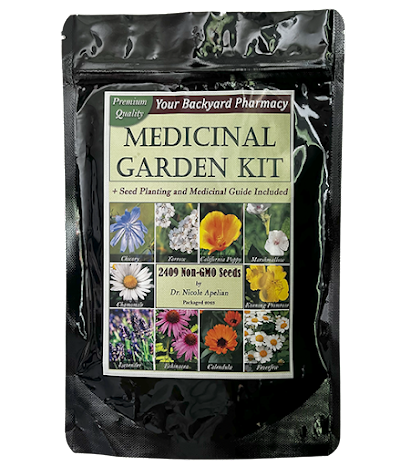
The 10 Medicinal Plants You’ll Have in Your Backyard
- I think everyone should have a medicinal garden in their backyard. This way, you can easily go and pick the remedy you need at any time. Your backyard pharmacy will be there for you even in times of crisis when pharmacies might be closed or looted.
- I made this Medicinal Garden Kit because I wanted to empower other people to take their health into their own hands.
- With your seed kit, you’ll also receive a FREE copy of Herbal Medicinal Guide: From Seeds to Remedies. This guide will show you how to turn these 10 plants into tinctures, ointments, salves, poultices, decoctions, infusions, and essential oils—all in minutes.
In traditional Oriental medicine, Mugwort herb is categorized by its bitter, sharp taste and warming properties and its traditional connection with the spleen, liver, and kidneys. For women, it has been used to warm the uterus, support healthy blood flow, ease discomfort, and address several pregnancy-related concerns.
What is Mugwort Tea?
Mugwort tea is a traditional herbal drink that is prepared from the leaves of Artemisia vulgaris, a plant appreciated for centuries across the world. With its unique natural earthy scent, slightly bitter taste, and warming character, Mugwort tea provides a cool and heartening drinking experience.
Beyond its traditional appeal, the herb has gained attention due to its strong wellness properties, especially in traditional digestive and relaxation routines. However, while modern science is still finding its usefulness, mugwort tea stands as a popular herbal drink for those looking for a unique addition to their wellness routine.
What are the Mugwort Tea Benefits?
Mugwort |Tea has a long history of traditional use in women’s health, especially relating to menstrual discomfort and reproductive health. It has been used to address irregular periods, ease menstrual pain or cramping, and promote overall wellbeing.
What are Mugwort Tea Benefits for Women?
Mugwort herb is traditionally used in different cultures to ease the menstrual cycle. It is commonly used as a tea or used in outer steams and pads to alleviate painful cramps, accelerate overdue blood flow, and gradually regulate irregular periods.
Constant drinking of Mugwort tea is considered to balance the hormonal shifts, creating the way for a smoother menstrual cycle. This balance can also decrease mood swings and other hormone-related discomforts.
Take 1 to 3 cups of Mugwort tea each day for a few days to ease your period like magic.
What are the Health Benefits of Mugwort?
Modern research has further discovered its various phytochemical properties, especially its essential oils, flavonoids, sesquiterpene lactones, phenolic acids, coumarins, and other bioactive elements. Initial and trial studies suggest that these ingredients may support to antioxidant, antimicrobial, analgesic, liver-supportive, gastrointestinal, and other biological activities.
While these results emphasize the benefits of Mugwort as a multifunctional herb, more research is required to establish its effectiveness and safety for specific health conditions. Below, we will explore the strong health benefits of Mugwort in detail:
Mugwort Treats Sciatica, Bone & Joint Pain: Mugwort is warm, supports boosting blood circulation, and helps blood carry nutrients in the body, including the skeletal system. In addition, the benefits of Mugwort herb include active ingredients that help relieve pain, fight inflammation, and support the effective relief of bone and joint pain caused by osteoarthritis, rheumatoid arthritis, sciatica, spinal spurs, etc.
There are many ways to treat bone and joint pain with mugwort, such as soaking your feet in mugwort water or drinking it. You can apply it in the following ways:
Reduce Joint Pain with Mugwort and Honey
- Both have good antibacterial, anti-inflammatory, and pain-relieving effects.
- Take a handful of crushed mugwort, then filter the juice and mix it with two tablespoons of honey.
- Should be used within 1-2 weeks. In addition, you can grind mugwort leaves, add a little water, then filter the juice and mix with honey.
Mugwort Water to Relieve Pain
- You can use fresh or dried Mugwort leaves to make a tea-like drink by boiling them.
- Boil the medicine until there is 1/3 of the original amount of water left, then turn off the stove.
- Drink mugwort water 3 times a day; use for 14 days to feel the effect.
Apply mugwort leaves with salt
- This is an effective and easy way to relieve pain.
- Just take mugwort leaves, depending on the amount needed for the compress, a small handful of coarse salt
- Heat mugwort leaves with sea salt until the color changes.
- Wrap hot mugwort leaves and salt in a thin towel and then apply to the swollen and painful joints.
- It should be used 2-3 times a day to see results.
It Helps to Treat Injuries
- It is packed with anti-inflammatory, antiseptic, and pain-alleviating properties. The benefits of mugwort are generally used to treat and prevent wounds. It can be used in first aid for emergencies such as snake bites, bleeding, and cuts on hands and feet.
- When bleeding, you can crush fresh mugwort leaves and add a little salt to apply to the wound. Only add a small amount of salt to open wounds to avoid stinging and burning.
Mugwort treats Weakness and Loss of Appetite
The remedy for physical weakness and loss of appetite from the benefits of Mugwort can be applied to many specialties. You can use mugwort stewed with nutritious foods such as pig’s feet, black chicken, pigeon, or add some other herbs such as:
- Use 200g mugwort, 2 pears, 20g wolfberry, 10g angelica, half a black chicken, and lotus seeds
- Prepare the above ingredients, then put them in a pot with 500ml of water.
- Season and simmer until soft, then turn off the heat and eat while hot.
- It can be divided into small meals throughout the day. Use continuously for 1-2 weeks to see the body recover better.
Mugwort Improves IgA Nephropathy
The studies have shown that enjoying the benefits of Mugwort for 6 months can decrease blood pressure and urinary protein levels in individuals with IgA nephropathy (a disease linked to glomerular harm and frequently seen in glomerulonephritis). The result is that the urine protein-creatinine ratio reduced considerably from 2,340 ± 530 to 315 ± 200 mg/g at the end of the supplementation period and remained constant during the 6 months without enhancement.
However, the benefits of Mugwort are well-known in several traditional and modern practices; some studies suggest it may not be suitable for people with kidney disease. Therefore, it is essential to consult with your doctor before enjoying the benefits of mugwort, particularly if you are considering it as a treatment for conditions like IgA nephropathy.
It Treats Inflammatory Diseases
Artemisinin, a plant compound found in wormwood, has anti-inflammatory properties in the body. It is supposed to prevent cytokines, proteins sent by the immune system to stimulate inflammation.
One of the most notable anti-inflammatory studies of wormwood was in Crohn’s disease, a condition characterized by inflammation of the lining of the digestive tract. In a study of 40 people with the condition, 500 mg three times daily reduced symptoms of diarrhea, fatigue, abdominal cramps, and other digestive problems.
It Treats Worms
The thujone extract in mugwort is thought to have the ability to treat worms, “stun” roundworms, and then push them out through intestinal peristalsis. Statistics show that in central Italy, Mugwort was used to deworm cattle, and ethnographic studies have recorded that in Dominica and India, Mugwort is broadly used to treat intestinal worms.
It Treats Fungus
Essential oil purified from mugwort also contributed to inhibiting the growth of two types of fungi, Candida albicans and Saccharomyces cerevisiae var. chevalieri.
Mugwort Treats Acne, Rashes, and Hives
The crucial benefits of Mugwort include its antiseptic and anti-inflammatory properties, which can help reduce swelling, itching, and inflammation caused by acne. You can apply the following treatment:
- Wash fresh mugwort with salt water to clean it, then drain.
- Take a sufficient amount of fresh mugwort, crush or puree it to make a mask.
- Apply to the face or itchy area for 15 minutes, then rinse with clean water.
- Mugwort can be used as bathwater for children to treat prickly heat.
Mugwort Improves Blood Circulation to the Brain
People who often suffer from anemia, dizziness, and headaches can use mugwort combined with eggs to increase blood circulation to the brain, reducing headaches and dizziness. The method is quite easy; you can make fried eggs with mugwort:
- Prepare 2 chicken eggs and a small handful of mugwort
- Wash and chop the mugwort, then mix well with the eggs and beat until the mixture thickens.
- Season with spices, then fry until golden brown.
- Should be eaten while hot; will not be bitter
Mugwort Treats Colds, Coughs, and Sore Throats
This is also a traditional remedy using mugwort to treat common colds, coughs, and sore throats. However, you should combine many herbs to be effective.
- Take 300g of mugwort, 100g of eucalyptus leaves, 100g of grapefruit leaves, and boil with 2 liters of water for 20 minutes, then turn off the stove.
- Cover your head with a hot towel and steam for 15 minutes.
In addition, you can drink mugwort decoction:
- Take 100g of mugwort, 100g of lily, 100g of perilla leaves, and 20g of lemongrass, and boil with 1 liter of water until it is reduced by half.
- Drink when thirsty
- Drink continuously for 3-5 days.
Mugwort Used as an Antioxidant
Mugwort includes chamazulene, which works as an antioxidant and is concentrated in the leaves and stems before the plant flowers. Antioxidants such as chamazulene can be good antioxidants, which are linked to cancer, heart disease, and Alzheimer’s.
Mugwort may help with Low Blood Pressure
Dried mugwort is processed into velvet moxa to make moxa sticks (moxibustion sticks) that can treat many diseases, such as pain and muscle spasms due to cold, cold flu, cold menstrual disorders, and even low blood pressure. Moxibustion to treat low blood pressure should be performed by skilled technicians or doctors. This is a treatment method combined with acupuncture points to improve symptoms of low blood pressure.
Mugwort is used as a Spice
Not only does it have medicinal effects, but the health benefits of mugwort also act as a nutritious food and can be combined in many dishes such as hot pot, fried eggs with mugwort leaves, chicken stewed with mugwort leaves, steamed carp with mugwort leaves, mugwort egg soup… You can use mugwort leaves in every daily meal to improve your health.
What are the Safety Tips for Using Mugwort
Though there are several health benefits of Mugwort, pregnant women should avoid using mugwort excessively, particularly
You should only use 3-5 tips at a time and should only eat it 3 times/week.
- If you have a history of miscarriage or premature birth, you should limit the use of mugwort.
- Consider use while breastfeeding
In addition, when using mugwort, you should note:
- Should not be used with antidepressants and antipsychotics, antiepileptics, statins, antidiabetics, anticoagulants, anticancer, antifungal, and antibacterial drugs.
- Do not use mugwort if you are sensitive to any ingredient of the herb
- Do not use mugwort regularly for more than 4 weeks.
Disclaimer: The information described in this article is intended for educational purposes only, and it is not intended to diagnose, treat, cure, or prevent any disease or medical condition. It should not be considered as a substitute for professional medical advice. The available information in this article about Mugwort is based on available research and traditional practices, and individual responses may vary from person to person.