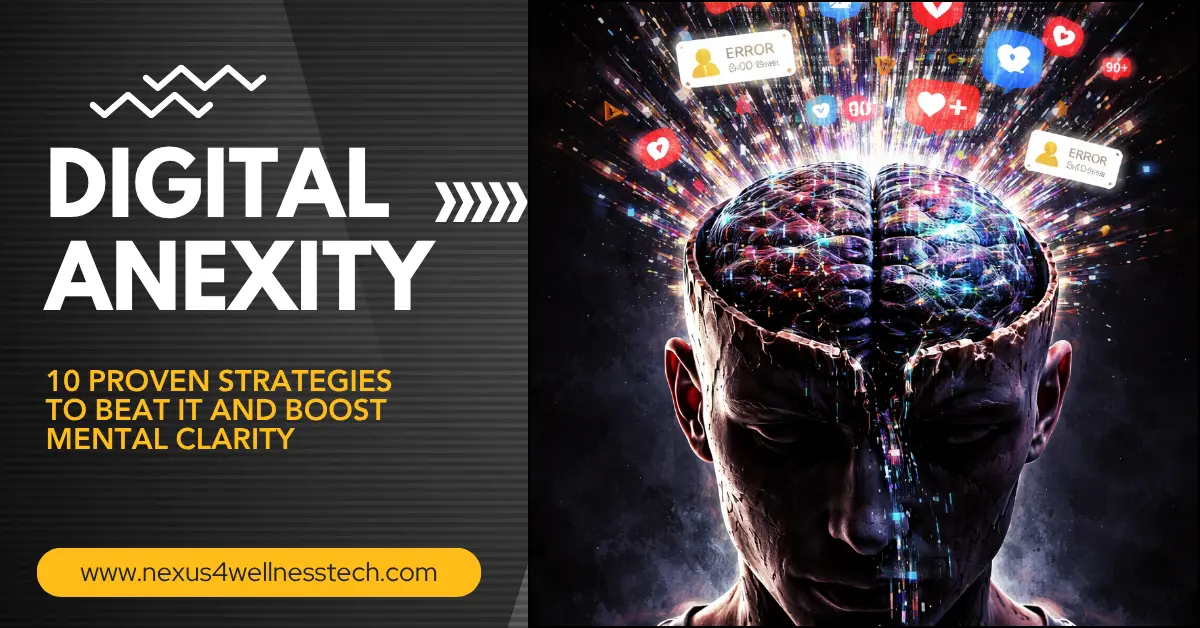
Digital Anxiety has become the most challenging issue of today’s hyperconnected world, where constant notifications, endless social media scrolling, and pressure to stay online can always devastate our minds. Although technology offers convenience and fast communication, it also promotes anxiety, stress, and panic, and a continuous fear of missing out.
The 10-Minute Morning Ritual That Eliminates Awkward Silences Forever
- The Mental Rehearsal system that transforms introverts into confident, natural conversationalists — in just 21 days, without changing who you are.
- Neuroscience-Backed: Activates your brain’s confidence pathways through mental simulation before you enter social situations.
- Anxiety Reduction: Creates mental familiarity with social scenarios so your nervous system stops treating them as threats.
- 10-Minute Efficiency: Maximum results in minimum time. Do it at home, in your car, or even at your desk before a meeting.
- Leverages Introvert Strengths: Uses your natural love of preparation and deep thinking as a superpower, not a weakness.
- Career & Life Multiplier: Better conversations directly translate to more opportunities, deeper relationships, and faster advancement.
This rising dependence on digital platforms affects individuals across generations, often contributing to reduced focus, sleep problems, and emotional fatigue. Recognizing the impacts of Digital anxiety is the first step toward creating healthier traditions, such as setting boundaries with devices, building awareness, and underscoring the real-life connection to maintain overall emotional well-being.
What is digital anxiety?
Constant connectivity through digital devices can lead to an overwhelming feeling known as digital anxiety that impacts both adults and children equally. Each person has a different patience level for information and communication; what feels practicable to one person may feel overwhelming to another. Digital Anxiety often rises from consistent social media scrolling, sad news, an inflow of messages, and the pressure to stay active and responsive online.
Over time, this failure to disengage blurs the boundary between rest and engagement, causing to mental tiredness and emotional strain. Identifying personal boundaries and creating healthy digital limits is important to preserve balance and protect overall well-being.
What is News Anxiety and How Does It Affect Well-being?
Short cases of stress over a short period can be beneficial, particularly when they serve as a sign that something is not correct and encourage us to make healthy changes. However, when this stress becomes imbalanced, it can add to and begin to damage both our physical and emotional health, which affects our mood, relationships, and performance.
In the current always-connected world, this often shows as news anxiety, where consistent coverage of painful headlines and information overload leaves us with overwhelmed feelings. This kind of digital anxiety can make us bad-tempered, over-worrying about spending hours troublesome scrolling, while also accelerating uncertainty, and low self-respect through unhealthy comparisons on social media. In more extreme cases, New Anxiety can expand into determined sadness or even depression, making it crucial to know these patterns and establish healthier restrictions with our digital consumption.
What Kind of Symptoms of Anxiety Show in Children?
Anxiety is an ordinary problem among children, but it often remains unchecked because it appears in different ways. It may occur in the form of fear, mood, withdrawal, or physical reasons like headaches. Some children show shyness, while others show impatience or clinginess, which can make anxiety problematic to know and emphasize the need for early understanding and support.
1. Low energy performance, such as leaving or avoidance
- On the other hand, high energy conducts such as annoyance, obsession, and emotional eruptions
- Common physical symptoms include stomach pain or headaches.
These problems can create fears when facing day-to-day situations, such as going to school, being in public, eating certain foods, and being away from caregivers. Over time, these symptoms can harm their ability to focus and learning, build up or maintain friendships, develop self-dependence, ultimately shaping how they observe themselves and their place in the world.
How can Parents Help the Children?
Managing children’s access to technology and building a strong wall around age-suitable digital content are an important part of modern parenting, specifically in addressing issues like digital anxiety. By probing a child’s biotic age, maturity level, personality, and temper level, parents can better realize how their child acts and interrelates with technology. Some children move easily between online and offline events, while others may struggle or feel overwhelmed, increasing the risk of digital anxiety. Changes in interests, emotional sensitivity, and desperate thinking development further shape how children are involved in digital spaces.
Does Social Media Cause Digital Anxiety?
The online and offline events can enhance feelings of worry, but the growth of digital anxiety has made online events especially challenging for children. Social media platforms especially aggravate this issue by exposing young users to endless comparison, cyber-bullying, and the pressure to maintain a curated online presence.
· The lack of face-to-face communication and the ability to stay anonymous make intimidation easier in online platforms. People are not accountable for their deeds, leading them to ignore others, reject classmates, or spread gossip more straightforwardly. Such behaviors can harm relationships and severely affect emotional well-being over time.
· Social Comparison – which can be healthy in restraint, often exaggerates on platforms like Instagram, TikTok, and YouTube, leading many young people to feel “Less than”, especially for young girls. Constant exposure to professionally edited and unrealistic images of beauty and lifestyle can change the perception of reality. This can reduce self-respect, damagingly impact body image, and affect overall mood.
· Heavy burden of information and permanent connectivity can create feelings of devastation and stress. Social media platforms are built to increase engagement and the feeding or creation of content, through what is known as “credible design,” such as the infinite scroll, autoplay function, or recommended content.
· Although some platforms apply some limitations, harmful user-created content can still go to children. In severe cases, they may face threats such as grooming, pornography, critical challenges, or sextortion, all of which can harm their mental and physical well-being.
Ways to Protect Kids from Social Media Anxiety?
Making a family tech agreement is the genuine method to build helpful digital habits and clear restrictions at home. By engaging the whole family in setting up prospects, you support open communication, communal accountability, and joint respect. Make the rules according to the child’s age, mental level, and developmental requirements, and create a space for flexibility as they grow and become freer. Daily reviewing and adjusting the agreement can help to ensure it stays important, while also educating children about responsible and caring technology use. Some of the key habits and practices are:
Be positive on what age-relevance means online, and make sure your child contacts age-relevant games and apps, including other digital content like podcasts and streaming shows.
· Established clear screen use and gaming program with clear on and off times (on weeknight and weekends.
· Find out quality screen time vs “brain rot,” and have regular discussions about the importance of expanding helpful online experiences.
· Switch off devices in the bedrooms
· If possible, stop digital activities before school
· Involve your child in digital co-watching and co-playing where you can watch or play together.
· Make sure, if your child is involved in private device use, i.e., alone in their bedroom, you have seen what they are doing.
Establish an ongoing conversation with your child about technology: talk to them about what they like and dislike about it, how it helps and hinders their wellbeing, relationships, and learning goals, and what we can all do to improve our digital wellbeing and online safety – parents included!
When Teens Should Seek Help?
Teenage years are the time of crucial changes, and when challenging feelings continue, it is important to softly discuss with your child and understand how they express “feeling better”. With the upswing of digital anxiety and news anxiety, many adolescents move towards online platforms for help, so they ask without any judgment, what resources they have studied, and whether they have been helped. If the challenges become permanent, then one must consult with a healthcare professional for mental and physical well-being. Remember, today’s youth are more comfortable communicating digitally, so they may need some supplementary support to adjust to direct discussion with professionals.
A New Kaspersky Survey on Digital Anxiety
A latest Kaspersky www.Kaspersky.co.za survey was conducted in the Middle East, Turkey, and Africa (META) region, which discloses that digital anxiety is becoming a major feature of modern work culture, as employees don’t disconnect even during their spare time and vacation as well.
According to the results, 83% of respondents keep an eye on their working responsibilities outside working hours. An awesome 85% reply regarding work messages in instant messaging apps, while the same share 85% check work email during their free time, and 81% acknowledge that they are responding to their work-related email while on vacation or in their free time.
The pressure to stay continuously available is leading to heightened stress levels in the workplace. Additional sources of stress include work issues, as instance 43% experience anxiety after unintentionally sending a random message to a work chat. Interestingly, not all digital mishaps are alleged equally – 40% report that they take it evenly when they send an incomplete email, showing that some mistakes are measured as less damaging than others.
Faint restrictions between professional and personal life, connected with fast communication tools, are increasing the feelings of instant monitoring and fear of making digital errors. More than a third (36%) of respondents say they feel very uncomfortable or even frightened if their boss notices them scrolling through social media instead of working during working hours. The always-online culture may destabilize employee wellbeing, enhance burnout threats and decrease overall efficiency in the long-term.
Digital Anxiety not only affects employee wellbeing it can also promote cybersecurity risks for institutions. When employees feel pressure to respond quickly to the messages and emails, they are more likely to act impulsively, without wisely confirming links, attachments or sender identity. This urgency can make employees more vulnerable to phishing and other scams using social engineering techniques, according to Brandon Muller, Technical Expert at Kaspersky. The following are the tips to tackle Digital Anxiety in the organization:
- Slow down before clicking or replying because digital anxiety can generate automatic reactions. A short break to evaluate sender details, i.e., URLs or attachments, can prevent security violations.
- Treat urgency as a red flag. Cybercriminals often misuse pressure and fear. Must verify sudden or urgent requests before responding.
- Don’t handle sensitive information on an unverified network. Public Wi-Fi, often used when working outdoors during regular hours, increases exposure to cyber threats. Mobile Network or VPN should be used in these particular cases.
Business organizations can decrease cybersecurity risks related to employees’ digital anxiety by proper cybersecurity training that helps the staff to know the risks and respond correctly, even under pressure. Simultaneously, organizations should use strong cybersecurity solutions to reduce the risks of human errors.